 Analysis by Gamescozy
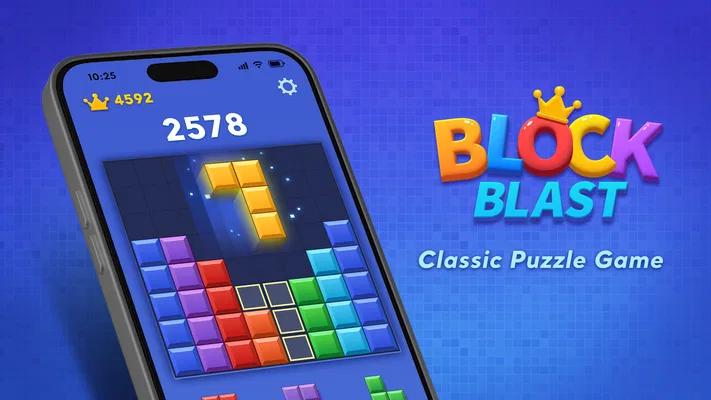
I reach for Block Blast! when I want a puzzle I can understand immediately but still have to think through. Its appeal is the familiar pleasure of fitting shapes into a grid, with no complicated setup to get between me and a quick round. That makes it easy to try during a quiet break, though the simple premise also means it may not satisfy someone looking for a story, a deep campaign, or a steady stream of new mechanics.
What matters when choosing a block puzzle
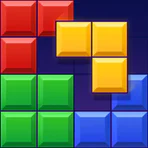
For this kind of game, I judge the experience by three practical questions: Can I make progress in short sessions? Does it reward planning rather than just quick reactions? And does it stay enjoyable once the basic rules are no longer new? Block Blast! is strongest on the first two. It is a puzzle game from HungryStudio, built around placing blocks and making room for what comes next.
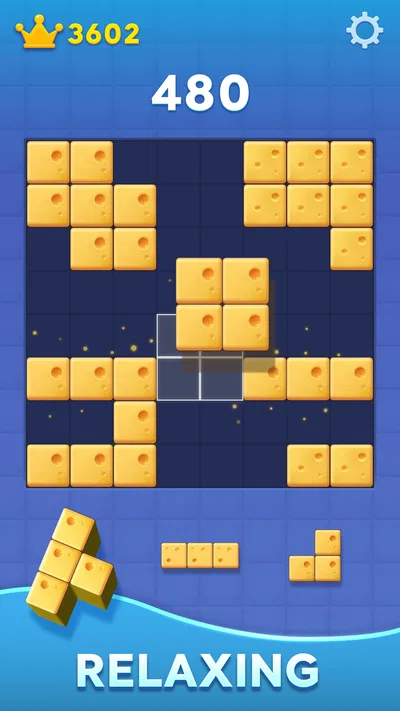
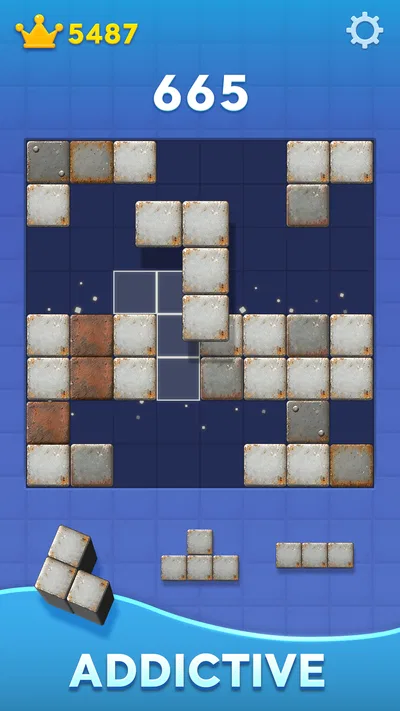
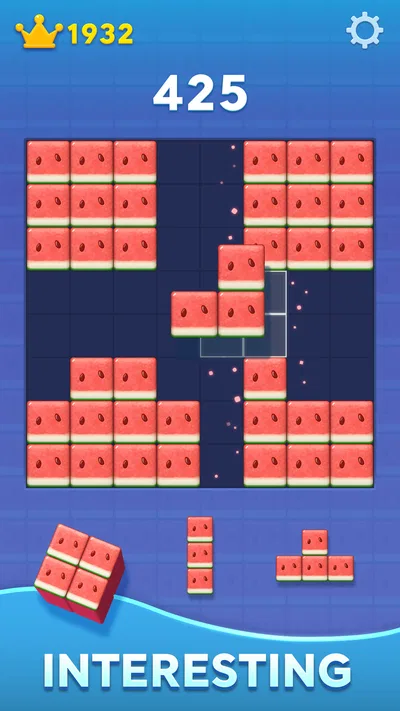
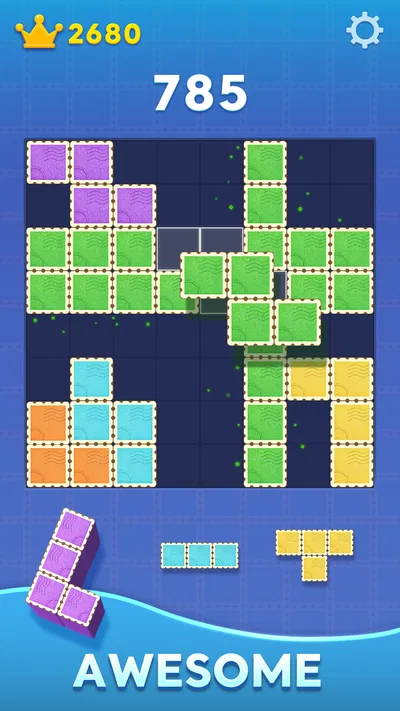
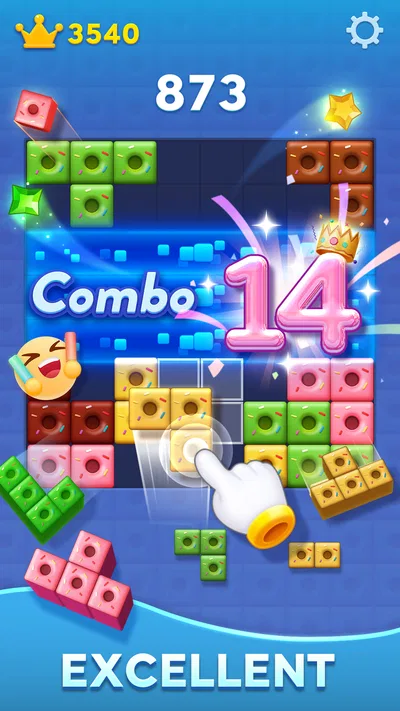
The basic loop is easy to grasp, which is useful if you want something you can open without revisiting a tutorial. The real decision is where to put each piece when the board begins to fill. A placement that looks good immediately can leave awkward gaps, while a less obvious move may preserve space for later shapes. Thinking one or two pieces ahead is more valuable than rushing to clear a line.
That balance makes it a good fit for people who like spatial puzzles but don’t want a large commitment every time they play. I can start a session while waiting for a drink or taking a short pause between tasks. It is less suitable if you need a puzzle that reliably ends at a specific moment: a promising board can tempt you to keep going, and the gradual pressure of limited space is part of the challenge.
A familiar rule set with room for judgement
Block Blast! belongs to the block-placement side of the puzzle genre, rather than a word game, match-three game, or reflex-focused arcade title. That distinction matters. You spend your attention on the shape of the board and the consequences of each placement, not on vocabulary, rapid taps, or a narrative objective. If those are the kinds of challenges you prefer, a different category will probably be a better match.
Compared with the usual alternatives, this style is direct: there is no need to learn a roster of characters or follow a long sequence of levels before the central puzzle makes sense. The trade-off is that the core activity carries most of the experience. People who enjoy gradually unlocking new systems may find a progression-heavy puzzle game more rewarding, while those who want a compact, repeatable spatial challenge may prefer this approach.
Where Block Blast! earns its place
The clearest strength is how well the game suits short bursts of attention. A commute, a waiting room, or a lull before a meeting can be enough time to make a few thoughtful placements. The game is also described as playable offline, a practical advantage when you are somewhere with unreliable Wi-Fi or simply want a puzzle without depending on a connection. I would still avoid starting a session when I need to be fully alert to an immediate interruption; a nearly full board is easier to mismanage when I’m distracted.
Its accessible premise does not make every move automatic. One useful habit is to look at the empty spaces before placing a piece, not only at the lines or areas that might be cleared. If a move creates a narrow pocket that only one kind of shape could use, that pocket may become wasted space. When I’m unsure between two placements, I favor the one that leaves the board more open and flexible, even if the other seems to offer a more satisfying immediate result.
A second practical insight is to treat the board’s overall shape as a resource. Filling one side heavily can make the remaining space difficult to use, especially when the open area becomes fragmented. I try to avoid building a tall, uneven cluster unless the placement has a clear payoff. This is not a magic strategy that guarantees a strong run; it is a way to reduce self-inflicted dead ends and make the next decision easier.
There is also a useful distinction between playing for a careful run and playing to unwind. When I want to protect a good board, I slow down and assess the available space before committing. When I only want a brief distraction, I accept that I may make a weaker move and enjoy the puzzle without turning every placement into a calculation. The game works for both moods, but the first approach is more satisfying if your main motivation is improving your judgement.
Block Blast! has a 4.8 average from around 5.8 million ratings, and it has passed 1 billion installs. Those figures suggest that its straightforward format has broad appeal, but popularity alone doesn’t tell you whether you’ll enjoy repeating the same central puzzle. I would use them as a sign that it is easy to approach, not as a promise that it will suit every kind of puzzle fan.
How it compares with other puzzle choices
If I compare it with match-three games, the main difference is the kind of attention it asks for. Match-three puzzles often invite quick pattern recognition and combinations on a busy board; here, I find myself weighing where a shape will fit and what that placement will leave behind. Neither approach is inherently better. Choose block placement if spatial arrangement is the fun part for you; choose a more action-oriented puzzle if you prefer faster visual decisions and a stronger sense of cascading effects.
Against word puzzles, Block Blast! is less dependent on language, making it an easy option when you want a visual challenge rather than a vocabulary test. Against logic games with fixed puzzles, it feels more open-ended: you are responding to the board in front of you instead of solving a clearly bounded problem with a known endpoint. That flexibility is convenient, though players who like a carefully authored puzzle with a definite solution may find a dedicated logic title more satisfying.
Its simple format also makes it easy to underestimate. The rules do not demand much explanation, but thoughtful play depends on restraint. It is tempting to take the first move that appears to fit. I get better results by checking whether a placement keeps multiple areas usable, rather than judging it only by how neatly the current piece lands. That small change in approach makes the game feel more strategic without requiring a complicated system.
Cost, device fit, and the effort of switching
The game is free to download, with optional in-app purchases listed from $4.99 to $49.99 per item. I would treat the free entry point as a chance to test whether the core puzzle holds my attention before spending anything. Purchases are not a reason to install it by themselves; the important question is whether you enjoy the repeated placement decisions. If you are trying to keep spending under control, check purchase prompts carefully and don’t assume an optional item is necessary to enjoy the basic idea.
The content rating is Everyone, so the puzzle’s subject matter is suitable for a broad audience. The release date was September 23, 2022, and the current version is 10.8.9. It requires Android 7.1 or later. Those details are useful when you are checking an older device or deciding whether to install it for someone else, but I would still check the app store on the actual device for compatibility before making plans around it.
Switching to Block Blast! from another casual puzzle is low effort in the everyday sense: the central rules are easy to pick up, and you do not need to bring knowledge from a previous game. The harder part is deciding whether you want to leave your current favorite. If you already enjoy word searches, fixed-level logic puzzles, or a game with a strong narrative, this may work better as a side option than a replacement. Its value is the quick, repeatable board challenge, not a promise to cover every puzzle mood.
People often wonder whether offline play makes it suitable for travel. It is presented as playable without Wi-Fi, which is helpful for a flight, a journey through patchy coverage, or a place where you prefer not to connect. I would still open it before leaving home if I were relying on it for a long trip, so I know it is ready on my device. That is a sensible preparation step for any game you plan to use away from a dependable connection.
Another common question is whether it is good for a very short break. Yes, the simple entry point makes it convenient to start quickly, but the puzzle can become absorbing once you are trying to preserve a crowded board. If you need a distraction with a firm stopping point, a level-based game that clearly signals completion may serve you better. If you are comfortable putting the phone down between moves, this one can fit into small gaps without requiring a long setup.
Who I would recommend it to
I recommend Block Blast! to anyone who enjoys arranging shapes, wants a visual puzzle that is easy to learn, and likes making small strategic decisions without committing to a long campaign. It is especially handy as an offline option and as a low-friction game to keep available for waiting or downtime. HungryStudio has built a format whose strengths are immediate access and the satisfaction of finding a better placement before the board tightens.
I would skip it if repetition quickly wears you down, if you want a clearly authored sequence of puzzles, or if you prefer games driven by words, story, or fast reactions. The core activity stays central, so the pleasure depends on enjoying that loop rather than waiting for it to transform into something else. That is the most important thing to know before installing it.
For me, the best reason to keep it is not that every session feels new, but that a familiar board can still present a fresh placement problem. I would start with the free version, take a moment to scan the whole board before each move, and see whether that quiet planning suits your breaks. Choose Block Blast! for an approachable spatial puzzle, not for a sprawling adventure or constant novelty.